Our ground-penetrating radar helps Tongling Nonferrous Group Jinguang Copper Industry precisely locate underground pipe leaks.
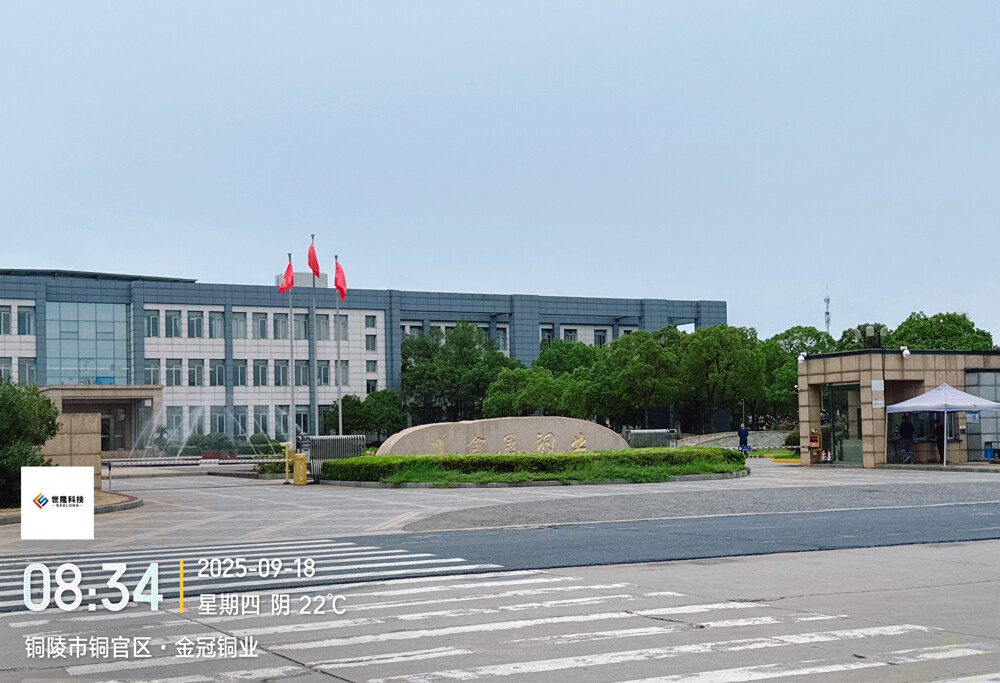
Recently, the technical team from Wuhan Shilong Technology Co., Ltd. traveled to Tongling Nonferrous Metals Group Co., Ltd.'s Jinguang Copper Industry Branch (hereinafter referred to as "Jinguang Copper Industry") with their self-developed SL-GPR wireless ground-penetrating radar (underground pipe locator) to conduct a specialized inspection for leak points in underground industrial pipelines. This technical service not only accurately located multiple hidden leaks but also provided scientific support to Jinguang Copper Industry for ensuring production continuity and reducing resource losses, demonstrating the practical value of domestic ground-penetrating radar technology in industrial operations and maintenance.
Jinguang Copper Industry, a core subsidiary of Tongling Nonferrous Group, specializes in copper smelting and the processing of related by-products. The facility features an underground pipeline network exceeding 100 kilometers in length, transporting critical production media such as circulating water, process oil, and compressed air. Due to the aging infrastructure and complex subsurface conditions—including soil settlement and medium corrosion in certain areas—covert leaks have emerged in recent years. Traditional manual inspections require ground excavation, which is labor-intensive, time-consuming, and disruptive to operations. Meanwhile, conventional detection equipment struggles with electromagnetic interference from the plant and dense pipe layouts, making precise localization difficult and creating a major operational challenge.
SL-GPR Wireless Ground Penetrating Radar: Theoretical Training
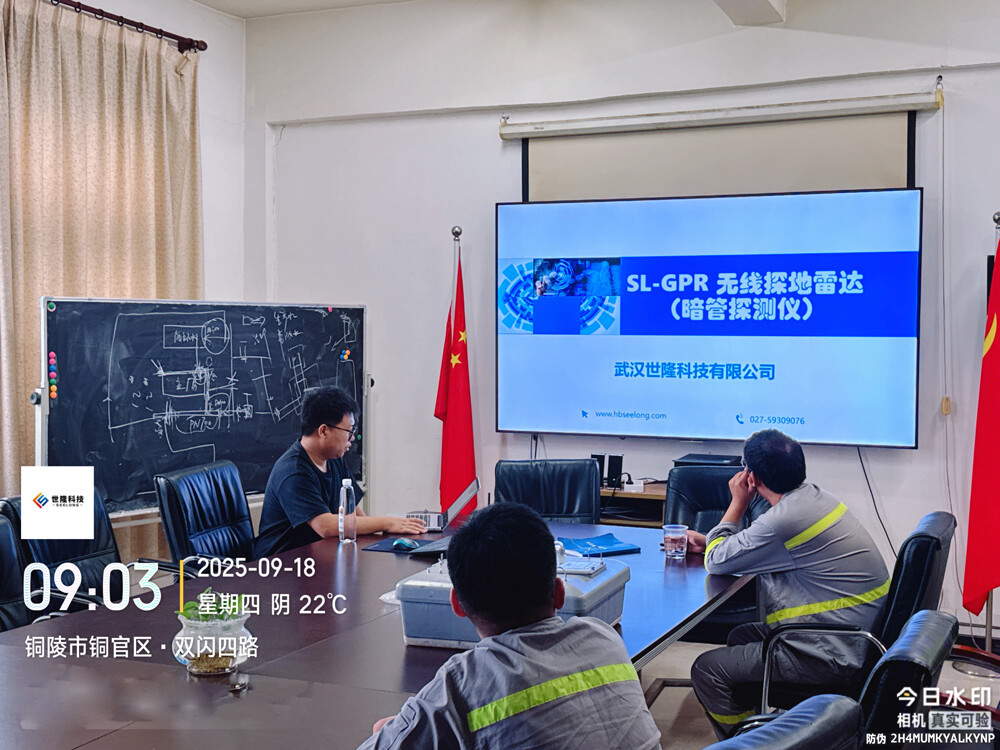
To overcome this challenge, Jinguang Copper Industry conducted extensive research and comparisons before partnering with Wuhan Shilong Technology. The newly deployed SL-GPR wireless ground-penetrating radar is a next-generation detection device developed by Shilong specifically for industrial environments, featuring three core advantages: 1. **Wireless portability**: The main unit weighs only 5 kg and operates via a handheld terminal without requiring cables, making it ideal for multi-workshop and varied terrain conditions across the plant (e.g., workshop corridors and areas around raw material yards). 2. **Strong anti-interference capability**: Using proprietary "multi-band adaptive filtering algorithms," it effectively suppresses electromagnetic interference from high-voltage equipment and motors, ensuring stable signal detection. 3. **High-precision positioning**: With a detection depth of 3-5 meters, it achieves sub-5-centimeter accuracy in locating leaks in both metallic and non-metallic pipes. It clearly visualizes pipe routes, diameters, and soil moisture variations around leak points, providing intuitive data for root cause analysis.
On-site Leak Detection
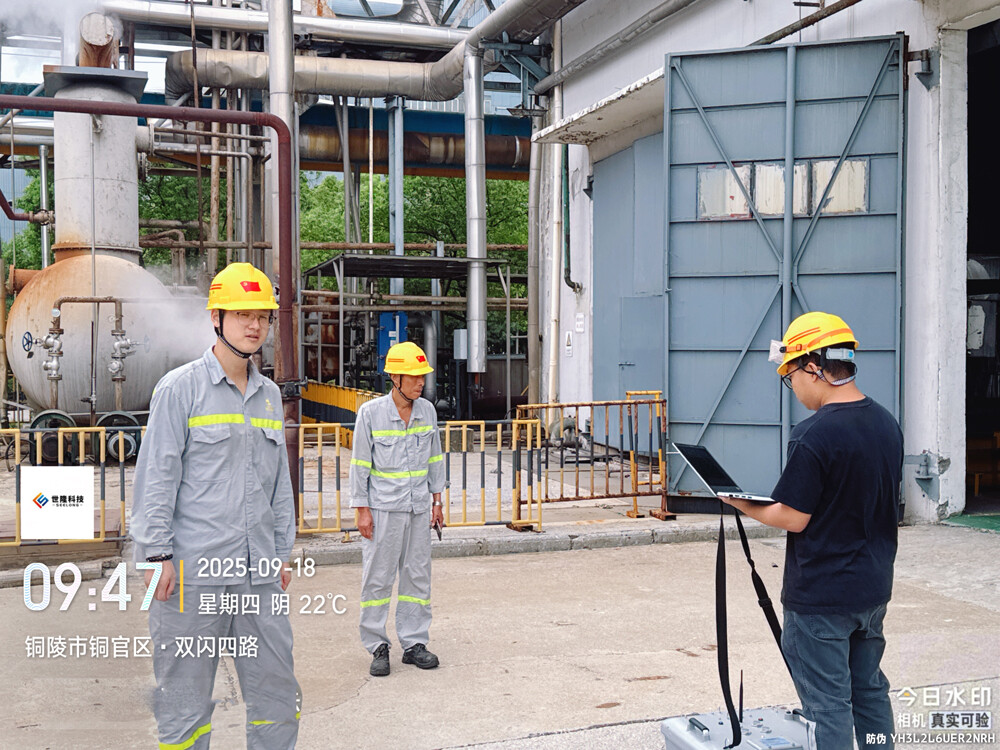
During the investigation, the Wuhan Shilong Technology team first collaborated closely with Jinguang Copper Industry's operations department to review historical maintenance records and pipeline drawings for key areas (such as the smelting workshop circulating water pipe zone and the power station fuel supply pipe zone). Based on this, they developed a "zone scanning with targeted verification" detection plan. On-site, technicians used SL-GPR equipment to emit high-frequency electromagnetic waves underground. When these waves encountered "anomaly zones" at leak points—such as soil moisture differences caused by water infiltration—they generated reflected signals. After processing through the device's algorithms, real-time radar cross-section images were produced on the data terminal. In just one day, the team completed full-coverage detection of underground pipelines in Jinguang Copper Industry's core production area, accurately pinpointing 3 concealed leaks.
"Previously, locating a single leak could take 3-5 days and required repeated excavation for verification. With the SL-GPR device, we can now 'see through' underground infrastructure instantly—pinpointing both the location and depth of leaks. Subsequent repairs now require precise excavation of only 1-2 square meters, reducing the project timeline by 80% while avoiding disruptions to production," said the head of the Operations Department at Jinguang Copper Industry during on-site acceptance. This inspection not only resolved the current leak issue but also included a comprehensive pipe health status report from Wuhan Shilong Technology, providing data-driven insights for future preventive maintenance. The company estimates this will save over millions of yuan annually in water and process medium losses caused by leaks.
The technical lead at Wuhan Shilong Technology stated, "Jinguang Copper's application scenarios demand extremely high anti-interference capabilities and precision from detection equipment. The successful completion of the mission by SL-GPR wireless ground-penetrating radar demonstrates that domestic GPR technology fully meets industrial-grade O&M requirements. In the future, we will further optimize device algorithms based on pipeline characteristics in the non-ferrous metal industry to provide more enterprises with integrated services combining 'precision detection' and 'O&M recommendations.'"
This collaboration not only validates Wuhan Shilong Technology's technical capabilities but also sets a benchmark for the non-invasive, high-precision, and high-efficiency operation and maintenance of underground pipelines in the nonferrous metals industry. As industrial enterprises demand more refined and intelligent O&M solutions, domestic ground-penetrating radar technology is poised to play an expanding role across diverse sectors, driving the transformation of traditional industrial O&M toward "technology-enabled precision control."