Northwest A&F University: Ground-Penetrating Radar Creates Precise Profile of Farmland Pipeline Networks
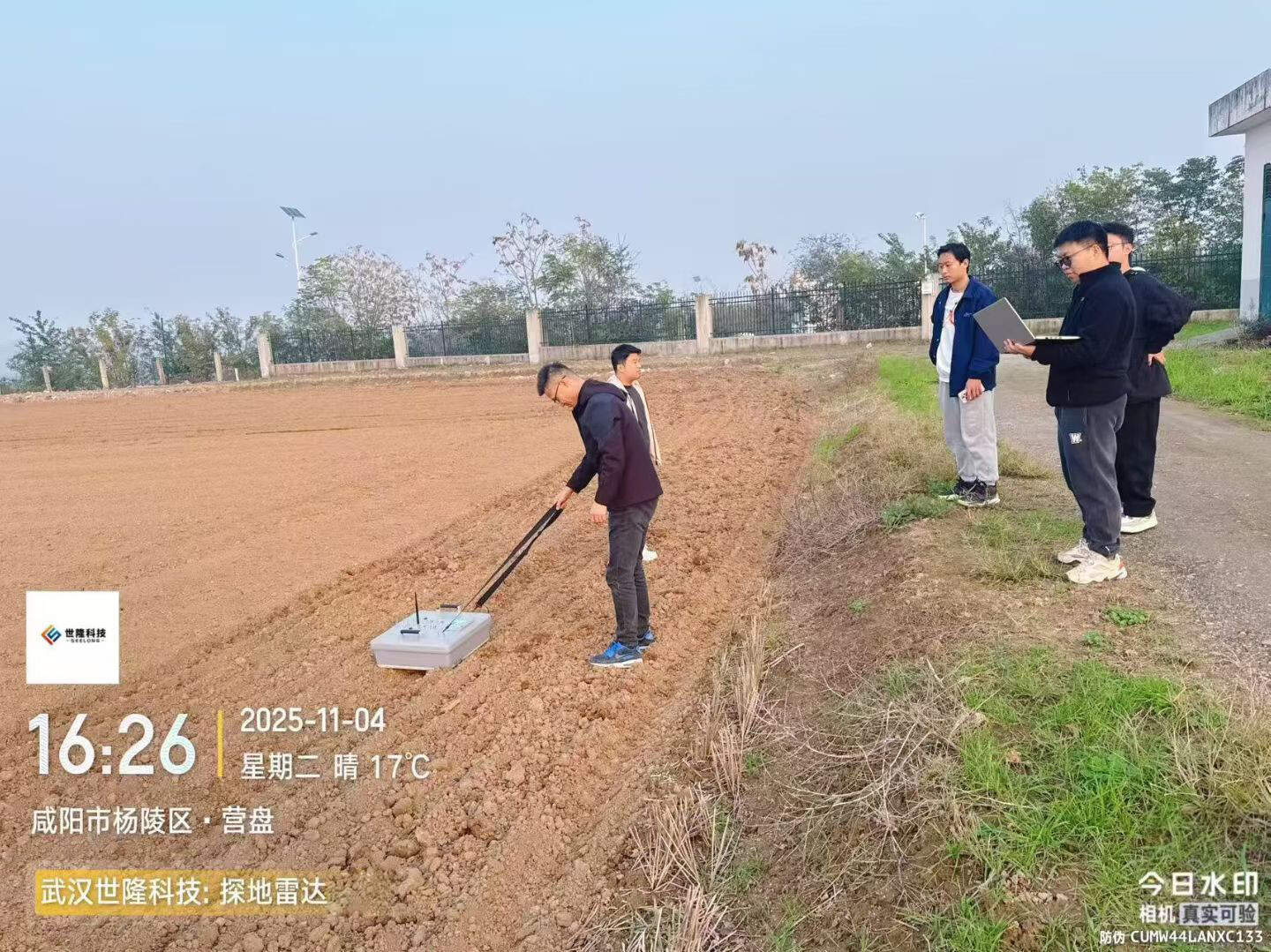
Northwest A&F University has introduced Wuhan Shilong Technology's SL-GPR wireless ground-penetrating radar (subsurface pipe detector), sparking a technological revolution in farmland underground pipeline detection and unveiling the mystery of subsurface networks.
Underground "X-ray Vision": How the SL-GPR Wireless Ground Penetrating Radar Creates Precise Maps of Farmland Pipeline Networks
Beneath vast farmlies lie the "lifelines" of agricultural production—underground networks such as irrigation pipes and hidden drainage conduits. These systems silently perform critical functions like water delivery and flood drainage, yet their unknown locations and aging damage often become major obstacles to farming. Traditional detection methods are not only inefficient but can also harm the fields. Now, Northwest A&F University has adopted Wuhan Shilong Technology's SL-GPR wireless ground-penetrating radar (for hidden pipe detection), sparking a technological revolution in underground pipeline exploration and effortlessly revealing what lies beneath.
1. Why Is Underground Pipe Detection in Farmland So Important?
Underground pipes are a core component of modern agricultural irrigation and drainage systems. Whether used for water conveyance in drip or sprinkler irrigation, or as subsurface drains for farmland wastewater treatment, their operational status directly impacts water use efficiency and the agricultural ecosystem. However, over time, some pipes may degrade or develop leaks, leading to water waste and potential secondary soil salinization. Additionally, during high-standard farmland construction or renovation, inaccurate knowledge of existing pipe locations and routes can easily result in construction damage, causing water supply interruptions or sewage leaks.
Previously, many regions faced similar challenges during high-standard farmland construction. Due to missing records of existing water conveyance pipelines, construction activities risked damaging critical water supply lines, ultimately requiring the deployment of professional ground-penetrating radar technology for resolution. These cases clearly demonstrate that precise underground pipeline detection is essential for ensuring the safe operation of agricultural water infrastructure and promoting efficient agricultural development.
II. SL-GPR Wireless Ground Penetrating Radar: The "X-Ray" of the Underground World
The SL-GPR wireless ground-penetrating radar from Wuhan Shilong Technology, used by Northwest A&F University, is not a traditional "detector" but an "underground X-ray vision" tool based on high-frequency electromagnetic wave technology. Its core principle involves emitting high-frequency electromagnetic pulses that penetrate subsurface media. Differences in electromagnetic properties among various materials (soil, pipes, moisture, etc.) generate reflected signals, which are then processed to infer the location, shape, and material composition of underground targets. Simply put, it functions like a medical ultrasound for the subsurface, using electromagnetic "echoes" to map out the contours of buried pipes.
1. Core Logic: Electromagnetic Waves' "Underground Journey"
The SL-GPR ground-penetrating radar operates through four key steps: First, the transmit antenna emits a high-frequency electromagnetic pulse (lasting only nanoseconds) downward. Next, the wave penetrates surface media like soil; when it encounters targets with different dielectric constants—such as pipes—part of the energy reflects back to the receive antenna while the rest continues propagating until attenuation. Then, the receive antenna captures these reflected signals and synchronously records critical parameters including travel time and amplitude. Finally, professional software processes the raw data via filtering and imaging to generate 2D or 3D visualizations that clearly display the pipe's location, burial depth, and orientation.
The key indicator for pipe detection is the dielectric contrast. For example, soil has a relative dielectric constant of approximately 3 to 15. Materials such as metal, PVC, and PE have significantly different dielectric constants compared to soil, causing strong reflection of electromagnetic waves that ground-penetrating radar can accurately capture.
2. Core advantages designed specifically for farmland scenarios
Compared to traditional pipeline detection equipment, the SL-GPR wireless ground-penetrating radar offers unique advantages in agricultural settings: 1. **All-Material Detection**: Unlike conventional detectors that only identify metal pipes, the SL-GPR can detect pipelines made of metal, PVC, PE, concrete, and other materials—perfectly suited for diverse pipe types found in farmland. 2. **Wireless Convenience**: Featuring an integrated host and antenna design, it is compact, lightweight, and supports wireless data transmission. This eliminates cable interference, enabling flexible movement across fields without damaging crops. 3. **High Efficiency & Precision**: Equipped with the dedicated Pipeline Automatic Recognition System (PARDS), it automatically analyzes data to determine pipe depth and location, significantly boosting detection efficiency. Its detection depth reaches 0~8 meters, fully covering typical burial depths of farmland pipelines. 4. **Non-Destructive Inspection**: It identifies underground pipelines without soil excavation, preserving the arable layer and aligning with modern sustainable farming practices.
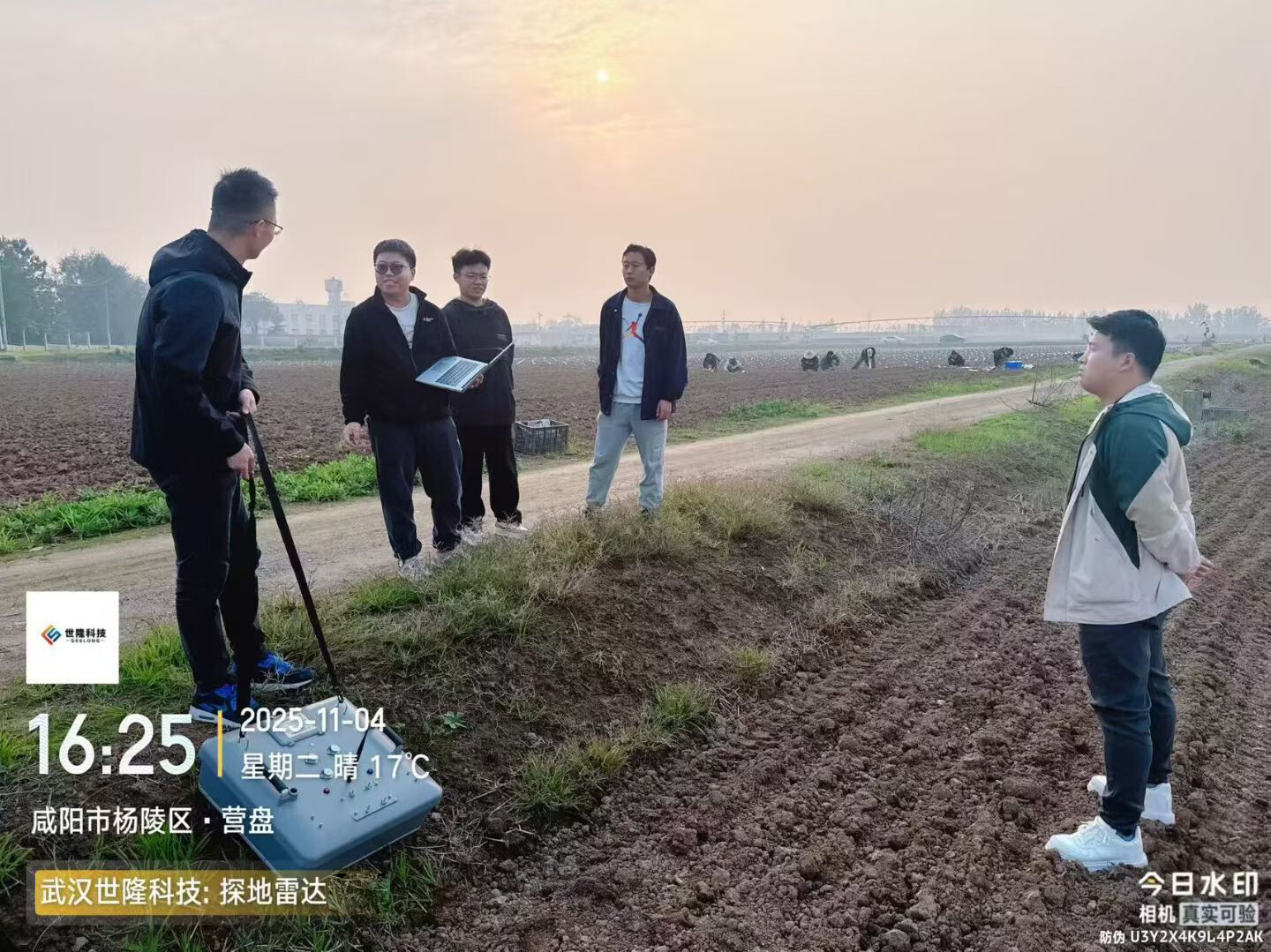
III. Shaanxi Agricultural University Pilot: Empowering Field Management with "X-Ray Vision"
As a leading institution in China's agricultural sector, Northwest A&F University has always been committed to advancing agricultural modernization through technology. The deployment of the SL-GPR wireless ground-penetrating radar is primarily aimed at detecting and inspecting underground irrigation pipes and hidden drainage conduits in farmland, effectively resolving several core challenges in farm management:
First, precisely locate aging pipelines. In farmland where irrigation pipes are old and records are missing, ground-penetrating radar quickly identifies exact pipe routes and burial depths. This provides accurate data for maintenance and upgrades, preventing resource waste and crop damage from blind excavation. Second, detect leakage hazards. Radar's sensitivity to electromagnetic waves reveals damaged or leaking sections: water accumulation changes soil dielectric constants, creating distinct reflection signals. This enables staff to identify and repair issues early, reducing water loss. Third, support high-standard farmland construction. During planning and construction, pre-detecting existing underground pipelines allows for scientific routing of new lines, avoiding conflicts and improving engineering efficiency and quality.
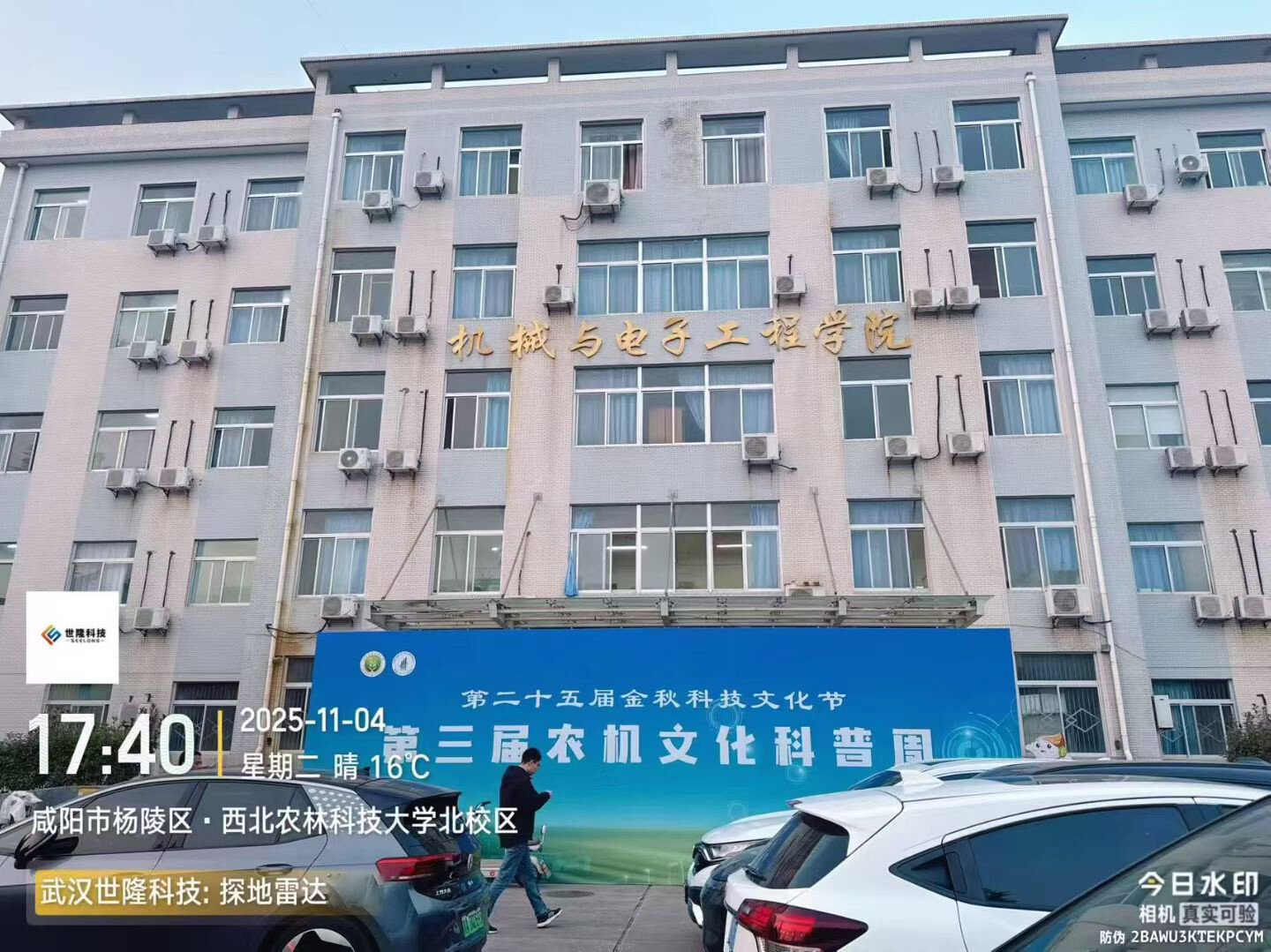
Furthermore, Northwest A&F University's research teams can leverage detection data to investigate the relationship between farmland pipeline distribution, soil moisture, and crop growth, providing empirical support for precision irrigation and water-saving agriculture. Ground-penetrating radar has already demonstrated significant potential in soil property analysis, enabling measurements of key indicators such as soil moisture content and stratification. In the future, Northwest A&F University may further expand its application scenarios, driving deeper integration of radar technology with agricultural research.
4. Technology Empowerment: The "Underground Revolution" in Smart Agriculture
The application of the SL-GPR wireless ground-penetrating radar at China Agricultural University exemplifies how technology empowers agriculture. As high-standard farmland construction advances across China, refined management of underground utility networks has become a critical priority for agricultural modernization. The widespread adoption of non-destructive testing technologies like ground-penetrating radar not only improves the efficiency of farmland water conservancy facilities and reduces resource waste but also provides precise subsurface spatial data to support smart agriculture.
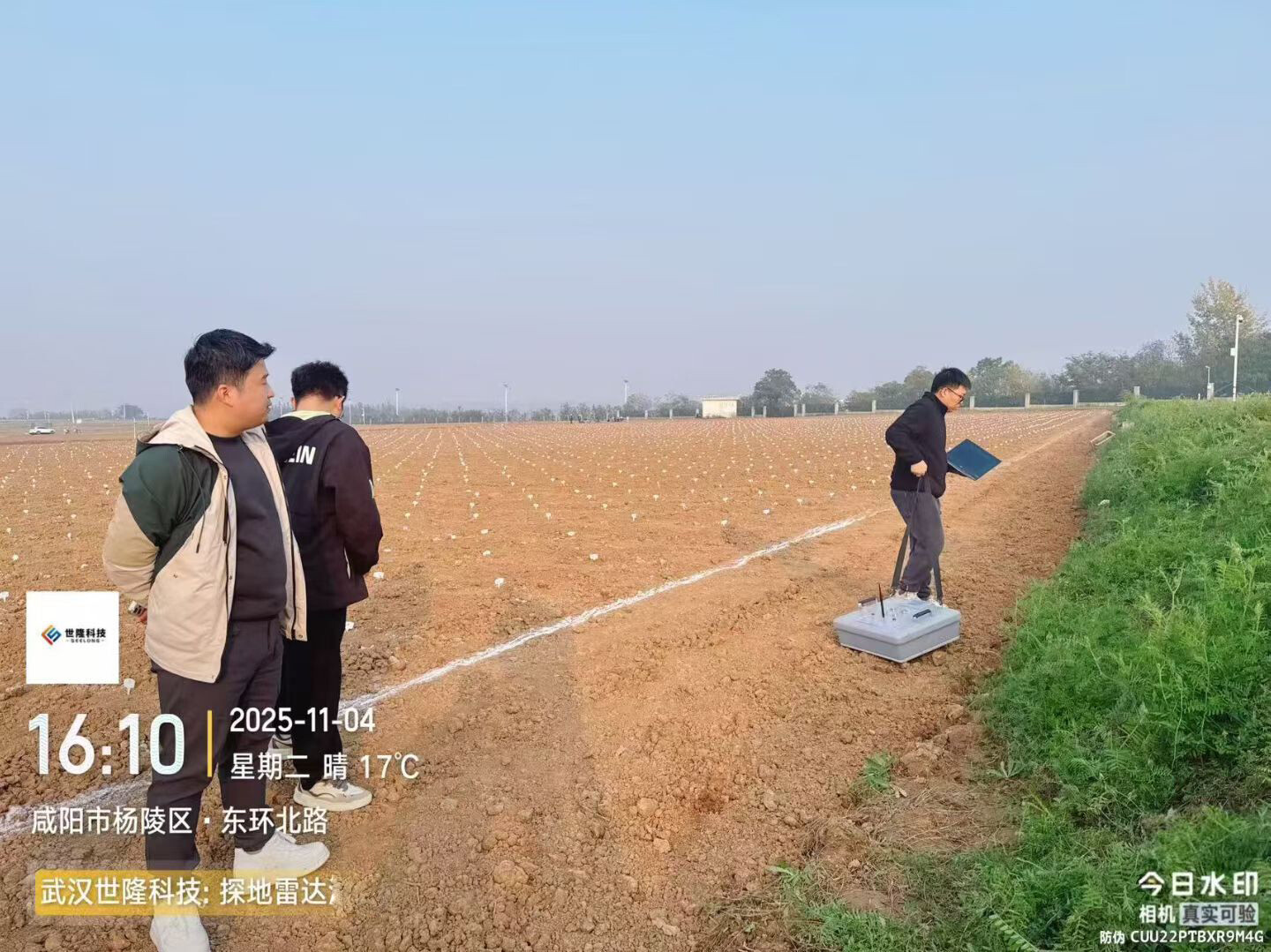
Ground-penetrating radar (GPR) has demonstrated significant value in agriculture through field research at Northwest A&F University. As signal processing technologies continue to advance, this "underground imaging" capability will become even more precise and efficient, driving high-quality agricultural development across China.